Cybersecurity influencer agency, you start looking for your marketing, and it feels stuck. You share posts. You run ads. But people do not respond. That can feel confusing. Your product may be strong, but in the cybersecurity industry, trust is hard to earn.
People do not trust brands first. They trust real humans, ethical hackers, CISOs, and security experts who talk about real cyber threats every day. When you see advice from voices like Joseph Steinberg or Chuck Brooks, it feels honest. You listen. You learn. That is the difference.
This is where a cybersecurity influencer agency helps you. You stop pushing ads. Instead, you work with trusted cybersecurity influencers who already have the attention of your audience.
Online, many agencies help you find the right people. Some tools, like Cyfluencer, even match you with micro-influencers and experts who already cover security topics. Other teams, such as Custom Influence and TEAM LEWIS, help manage the full campaign.
People learn about things like Zero Trust, DevSecOps, and data privacy in a simple way. This also keeps you safe from wrong claims and follows rules like GDPR and SOC 2.
If you want to reach startup founders, IT teams, or security leaders, even in big tech hubs supported by groups like Fairfax County Economic Development Authority, you need more than views.
You need trust. A cybersecurity influencer agency helps you build that trust step by step. It turns your brand from “just another company” into a voice people believe.
You are not just doing digital marketing here. You are building trust in a careful way. Your message shows up on places like LinkedIn, YouTube, and Twitter, where real security talks happen.
What Is a Cybersecurity Influencer Agency? A Simple Explanation.
Think of it like this. You have a strong cybersecurity product. But people don’t know if they should trust you. A cybersecurity influencer agency helps you fix that.
1. In Simple Words: Cybersecurity Influencer Agency.
Cybersecurity influencer agency connects you with trusted people in the cybersecurity world. These people can be:
- Ethical hackers
- CISOs
- Security experts
- Real cybersecurity influencers
They already talk to your audience every day. So when they speak about your brand, people listen.
2. How Cybersecurity Influencer Agency Really Works
- Instead of you saying, “Our product is secure.”
- An expert explains, “Here’s how this tool helps stop real cyber threats.”
That small change builds trust fast.
3. Who Helps You Do Cybersecurity Influencer Agency
Some well-known agencies do this work:
- AWISEE
- Highwire PR
- Walker Sands
- Wadi Digital
Some platforms, like Cyfluencer, even help you find the right cybersecurity influencers faster.
Teams like Custom Influence and TEAM LEWIS can manage everything for you.
4. Where This Happens
Most of the Cybersecurity Influencer Agency’s work happens on:
- YouTube
These are places where real cybersecurity talks happen.
5. Why Cybersecurity Influencer Agency Matters for Your Branding
You stop trying to “convince” people for your personal or business branding.
Instead, you let trusted voices:
- Targeted Branding Location
- Explain your product
- Show real use cases
- Build confidence
Simple idea, you don’t build trust alone. You borrow trust from people who already have it.
Why Your Cybersecurity Marketing Is Not Working And What You Can Fix?
You may feel this already. You try hard, but the results stay low.
- You post on LinkedIn.
- Also, share on Reddit
- You share videos on YouTube.
- You even join talks on Twitter.
Still, people scroll past. Let’s look at why this happens.
1. Problem: People Do Not Trust Brand Messages
In cybersecurity, trust is everything. If you say, “your product is safe,” people question it. They have seen too many bold claims before. But when experts like Joseph Steinberg or Chuck Brooks explain the same idea, people listen.
- The message is the same.
- The voice makes the difference.
2. Problem: Your Content Feels Too Technical or Too Generic
Sometimes, content goes too deep. Other times, it stays too basic. You may talk about:
- Zero Trust
- DevSecOps
- threat intelligence
But your reader feels lost. Or bored. They need simple words. Real examples. Clear meaning.
3. Problem: You Are Talking At People, Not With Them
Many brands just post and leave. No conversation. No trust building. But cybersecurity professionals want:
- real discussion
- real experience
- real answers
That is why they follow influencers, not ads.
4. Problem: You Are Reaching the Wrong Audience
Not every platform works the same as the cybersecurity influencer agency offers.
For example:
- LinkedIn is best for CISOs and decision-makers
- YouTube is best for deep learning
- Instagram less effective for technical trust
If you are in the wrong place, even good content fails.
5. Problem: No Social Proof
People ask one simple question, “Who else trusts you?”
If no cybersecurity influencers or experts talk about your brand, you look unknown. That is risky in a field where security matters.
Simple Shift: What You Can Do Instead?
You do not need more content. You need better trust.
This is where a cybersecurity influencer agency helps:
- connects you with real experts
- puts your message in trusted voices
- builds social proof step by step
- keeps your content clear and safe
Agencies like AWISEE or Highwire PR already follow this model.
Simple facts: Your problem is not visibility, and the problem is trust. So, fix trust first. Results follow.
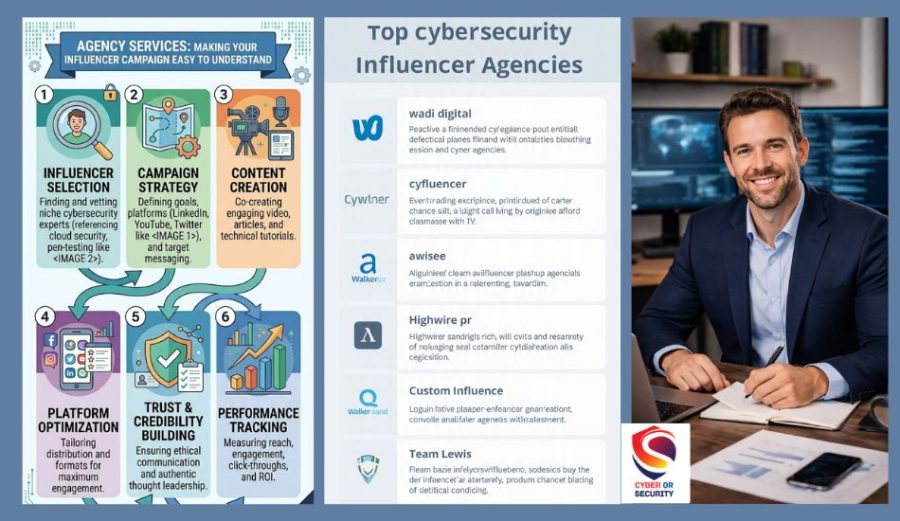
Why People Trust Influencers More Than Cybersecurity Brands?
This may feel unfair at first. You build the product, test it, and know it works. But still… people trust someone else more. Let’s see why.
1. People Trust People With Real Experience
When someone like Joseph Steinberg or Chuck Brooks talks about security, it feels real.
Why?
Because they:
- share real stories
- explain real cyber threats
- show what actually happens in the field
It feels like advice, not marketing.
2. Brands Sound Like They Are Selling
When a company speaks, people think, “They just want to sell me something.”
Even if your message is true, it still feels like an ad. That creates doubt.
3. Influencers Explain Things in Simple Ways
Cybersecurity topics can be hard:
- Zero Trust
- DevSecOps
- data privacy
Experts break these into simple ideas. They use examples to show real use cases. This helps beginners understand fast.
4. Influencers Build Trust Over Time
Influencers don’t just post once. They:
- Share tips daily
- Answer questions
- Talk about new cyber threats
On platforms like LinkedIn and YouTube, people follow them for a long time. So trust grows slowly but strongly.
5. People Follow Communities, Not Companies
Cybersecurity is a community. People listen to:
- Ethical hackers
- CISOs
- Cybersecurity professionals
They talk, share, and learn together. Brands are outside this circle. Influencers are inside it.
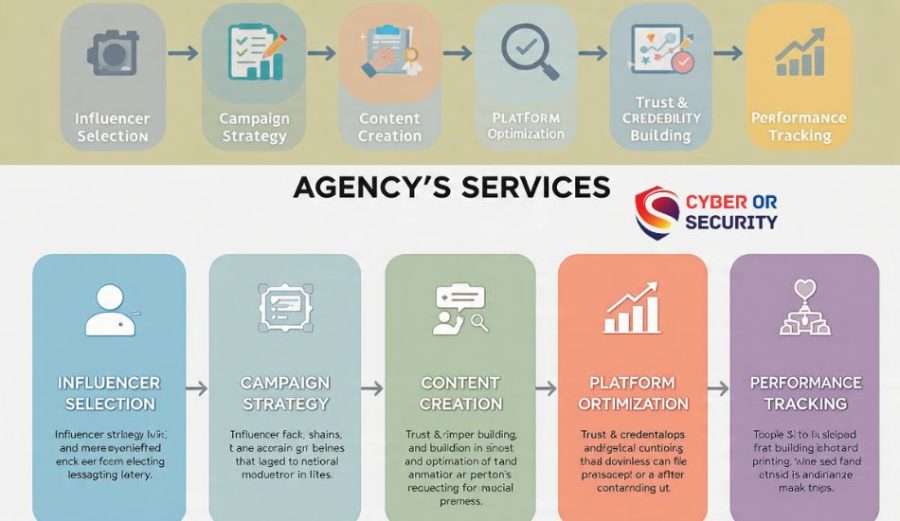
What does a Cybersecurity Influencer Agency mean for you?
You don’t need to fight this. You can use it. When you work with a cybersecurity influencer agency, you:
- Place your message inside trusted voices
- Join real conversations
- Build social proof naturally
Agencies already use this approach to help cybersecurity brands grow safely. People don’t trust what you say about yourself. They trust what trusted experts say about you.
Which Social Media Platforms’ Cybersecurity Influence Actually Happens?
You may think, “I just need to post everywhere.” That sounds right. But it doesn’t work.
In cybersecurity, place matters more than volume. You need to show up where real security people already talk.
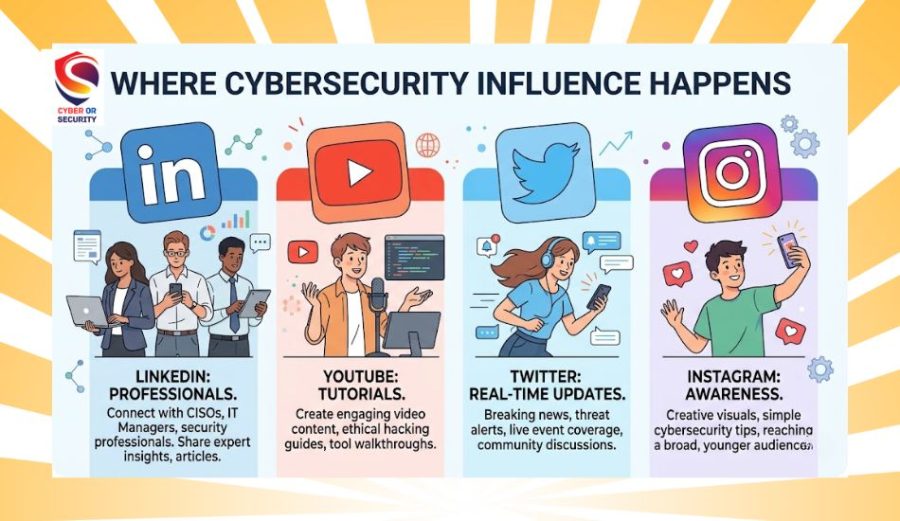
1. LinkedIn: The Main Hub of Cybersecurity Influencer Agency.
LinkedIn is the most important place for the cybersecurity influencer agency marketing and branding. Here, you find:
- CISOs
- IT managers
- Cybersecurity professionals
- And decision-makers
People come here to:
- Learn about cyber threats
- Read expert opinions
- Explore new tools
Most cybersecurity influencer campaigns start here.
2. YouTube: Deep Learning Space
Some topics need more time. Like:
Videos help explain step by step. Experts break things down so you can see how it works.
This builds strong trust.
3. Twitter: Real-Time Updates
Twitter (X) is where fast conversations happen.
People share:
- new cyber threats
- attack news
- quick insights
It moves fast and good for visibility, but trust builds more slowly here.
4. Instagram: Limited for Technical Trust
You can use Instagram for a cybersecurity influencer agency:
- Simple awareness
- Brand presence
But it is not strong for deep cybersecurity topics. Use it carefully, not as your main focus.
What This Means for You
Not every platform fits your goal. If you want:
- Trust focus on LinkedIn
- Deep learning uses YouTube
- Fast updates use Twitter
How do agencies help you here?
A cybersecurity influencer agency already knows:
- Where your audience spends time
- Which platform fits your message
- How influencers work best on each channel
For example, AWISEE focuses on LinkedIn-driven strategies, and Wadi Digital uses platforms like Cyfluencer to match experts
Simple idea: You don’t need to be everywhere, and you need to be in the right place.
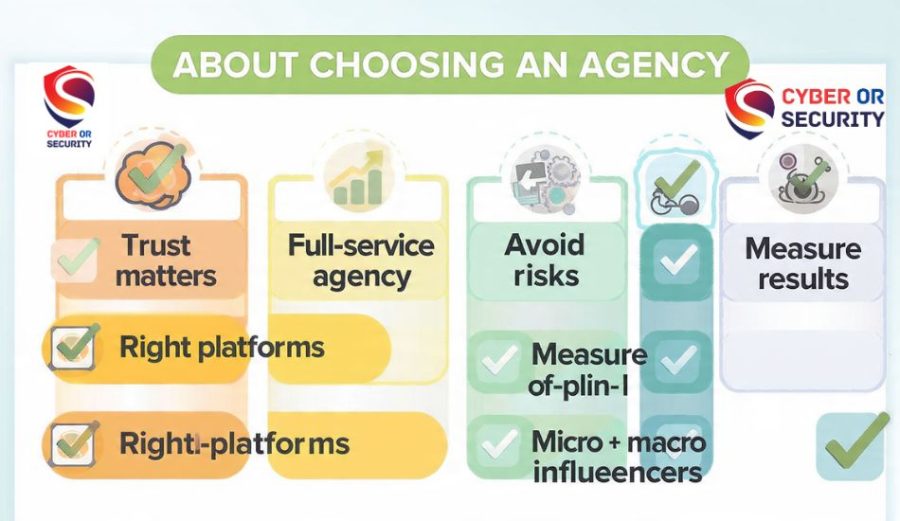
How does a cybersecurity influencer agency actually work step by step?
Here’s where cybersecurity influence actually happens:
| Platform | Purpose / Why It Matters | Audience / Who Uses It | Best For | Agency Example |
| LinkedIn LinkedIn | Main hub for professional cybersecurity discussions | CISOs, IT managers, cybersecurity professionals, decision-makers | Trust-building, B2B campaigns, technical thought leadership | AWISEE |
| YouTube YouTube | Long-form content for deep understanding | Security teams, technical audiences, learners | Explaining penetration testing, Zero Trust, and DevSecOps | Wadi Digital |
| Twitter Twitter | Real-time updates and conversations | Security analysts, tech enthusiasts | Fast threat alerts, short insights, and visibility | Highwire PR |
| Instagram Instagram | Awareness and light brand presence | General audience, beginners | Brand presence, simple security awareness | Custom Influence |
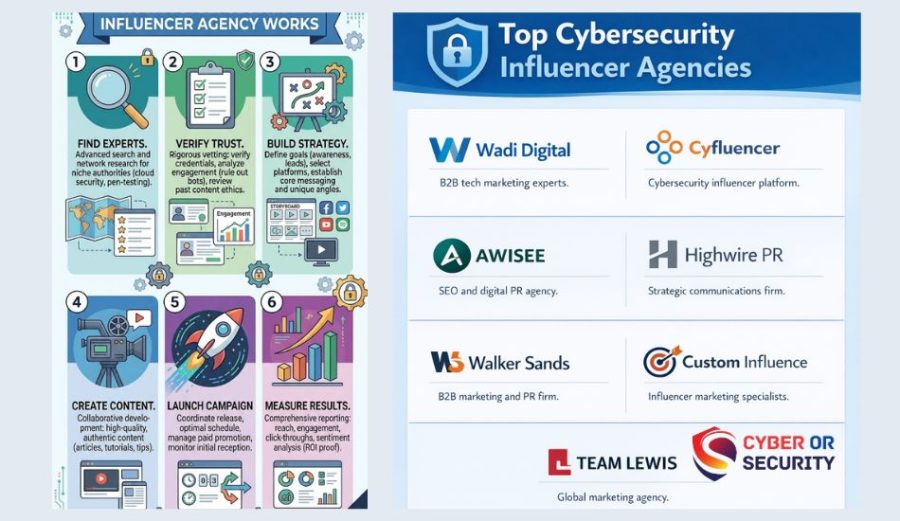
When it comes to cybersecurity influencer marketing, not all agencies are the same. Some focus on connecting brands with the right experts, while others manage the full campaign from strategy to execution. Here are some of the top agencies and what makes them stand out: Branding.
Step-by-Step: How a Cybersecurity Influencer Agency Works?
Many agencies are trusted because they understand that cybersecurity marketing is not just about reach, credibility, accuracy, and connecting with audiences who care about real threats.
| Step | What Happens | Who’s Involved | Why It Matters | Example / Agency |
| 1. Find the Right Experts | Identify ethical hackers, CISOs, security influencers, micro and macro influencers | Cybersecurity professionals, influencer managers | Ensures your message comes from trusted voices | Cyfluencer |
| 2. Verify Trust & Accuracy | Check certifications, past content, and experience | Agencies, influencer vetting teams | Avoids misinformation and builds credibility | AWISEE |
| 3. Build Campaign Strategy | Plan what to post, when, and where; choose platforms | Marketing strategists, influencer managers | Ensures the message reaches the right audience at the right time | Highwire PR |
| 4. Create Valuable Content | Develop posts, videos, tutorials, or demos explaining cybersecurity topics | Influencers, content creators | Makes technical topics simple and engaging | Wadi Digital |
| 5. Launch & Manage Campaign | Publish content, monitor engagement, and respond to questions | Influencers, campaign managers | Keeps the campaign active and interactive | Custom Influence |
| 6. Measure Results & Build Social Proof | Track engagement, leads, trust signals, and conversions | Agency analysts | Shows what works, improves future campaigns | TEAM LEWIS |
A cybersecurity influencer agency does more than marketing. It builds trust, educates your audience, and ensures your message is accurate and credible, all while showing up in the right place at the right time.
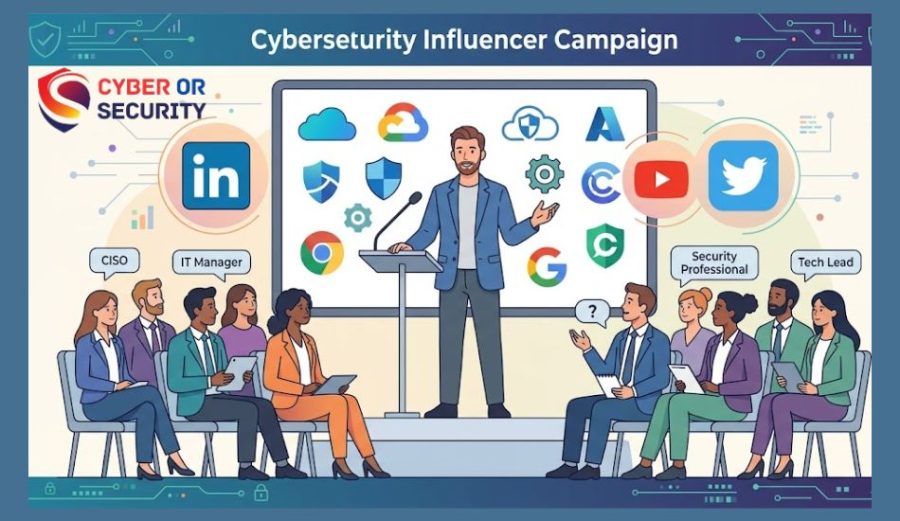
Services Offered by Cybersecurity Influencer Agencies
Cybersecurity influencer agencies don’t just run ads. They provide services that make your brand trusted, visible, and credible. Here’s what they typically offer:
- Influencer Selection: Identify the right experts, ethical hackers, CISOs, security professionals, and micro influencers who align with your brand.
- Campaign Strategy & Management: Plan and manage campaigns from start to finish, ensuring your content reaches the right audience on the right platforms.
- Content Creation: Develop clear, engaging posts, videos, tutorials, or demos that simply explain complex cybersecurity topics.
- Platform Optimization: Choose the best channels for your audience, such as LinkedIn, YouTube, or Twitter.
- Trust & Credibility Building: Ensure all messaging is accurate, compliant with regulations (GDPR, SOC 2), and backed by verified experts.
- Performance Tracking & Analytics: Measure engagement, lead quality, and social proof to improve future campaigns.
- Micro & Macro Influencer Management: Handle influencer relationships to maintain consistent and credible messaging across channels.
Key Point: These services are designed to do more than promote your brand; they build trust with audiences who care deeply about cybersecurity, turning awareness into credibility and engagement.
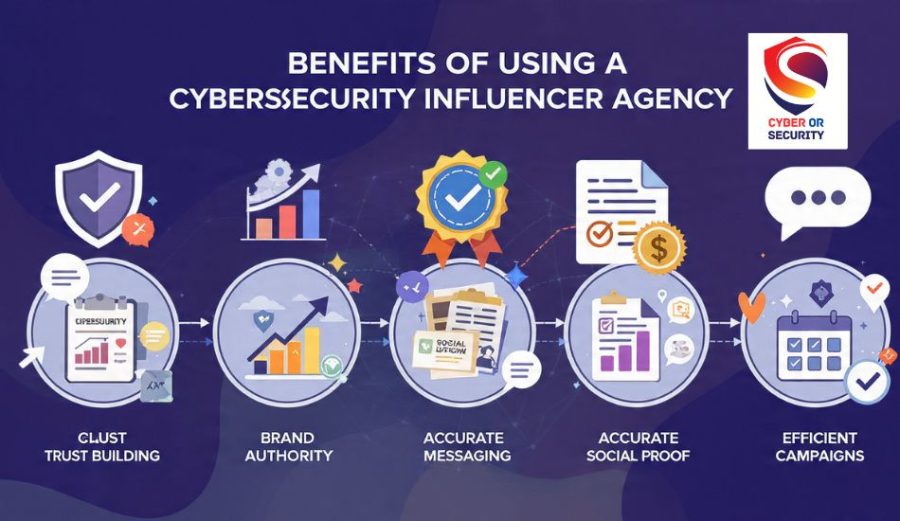
Why You Need a Cybersecurity Influencer Agency: The Real Benefits.
Working with a cybersecurity influencer agency is more than a marketing choice; it’s a strategic move to build trust, authority, and long-term credibility. Here’s why it matters:
- Faster Trust Building: By partnering with trusted voices like Joseph Steinberg or Chuck Brooks, your brand gains credibility faster than self-promotion alone.
- Better Quality Leads: Influencers speak directly to decision-makers, CISOs, IT managers, and cybersecurity professionals, so the audience is already interested and qualified.
- Stronger Brand Authority: Consistent messaging through experts shows your brand knows the field, from Zero Trust and DevSecOps to real cyber threats.
- Accurate and Compliant Messaging: Agencies ensure that your campaigns follow security rules and regulations like GDPR and SOC 2, avoiding misinformation.
- Social Proof That Matters: Being featured by respected cybersecurity influencers gives your brand a seal of approval in a space where credibility is everything.
- Efficient Use of Time and Resources: Instead of figuring out influencers, content, and platforms on your own, agencies handle the strategy, execution, and measurement.
In cybersecurity, visibility alone is not enough. Trust is the currency, and an influencer agency helps you earn it safely and efficiently.
Hidden Risks Cybersecurity Influencer Agency You Must Avoid
Even with a cybersecurity influencer agency, not every campaign is safe. Some mistakes can damage trust instead of building it. Here’s what to watch out for:
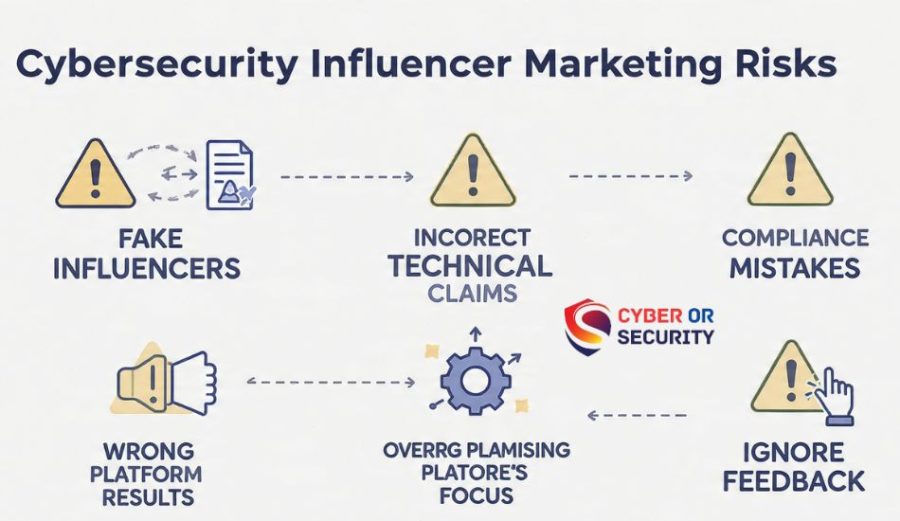
- Fake or Unverified Influencers: Not every influencer knows cybersecurity. Using someone without proper experience can backfire.
- Incorrect Technical Claims: Sharing wrong information about Zero Trust, DevSecOps, or threat protection can ruin credibility.
- Compliance Mistakes: Ignoring regulations like GDPR or SOC 2 can lead to legal trouble and loss of trust.
- Overpromising Results: Claiming “100% protection” or “instant security” makes your audience skeptical.
- Wrong Platform Focus: Posting on channels your audience doesn’t use wastes effort and reduces impact.
- Ignoring Audience Feedback: Not engaging with questions or concerns makes campaigns feel impersonal.
Key Point: Cybersecurity marketing is high-stakes. Trust can be lost in a single wrong post. Agencies that understand the field prevent these mistakes and keep your campaigns credible.
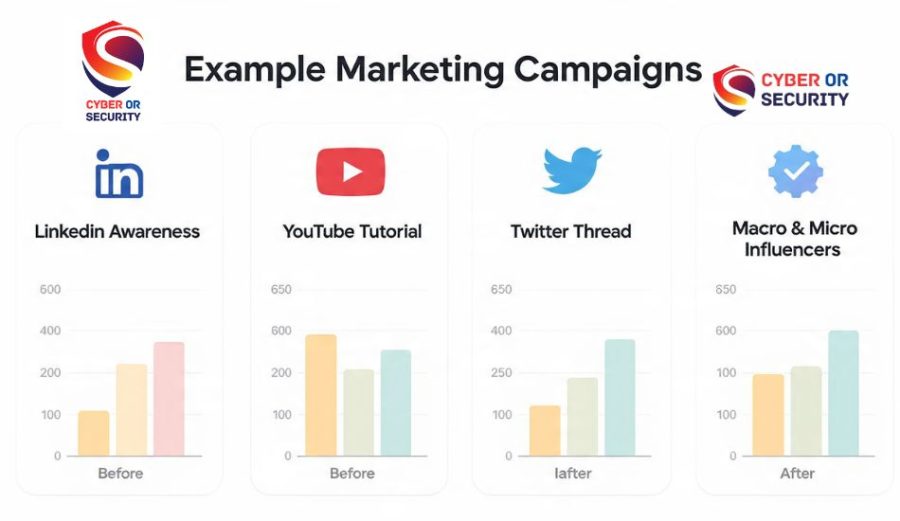
Real Examples: How Cybersecurity Influencer Campaigns Work?
Seeing real campaigns helps you understand why a cybersecurity influencer agency matters. Here are examples simplified for beginners:
Example 1: LinkedIn Awareness Campaign
- Agency: AWISEE
- Goal: Reach CISOs and IT managers about a new threat detection tool
- How: Partnered with verified cybersecurity influencers to post insights, tips, and short tutorials
- Result: High engagement, meaningful discussions, and leads from decision-makers
Example 2: YouTube Technical Demonstration
- Agency: Wadi Digital
- Goal: Explain a complex Zero Trust deployment
- How: Influencer created step-by-step videos showing real-world use
- Result: Audience understood the solution, increasing trust and inquiries
Example 3: Social Proof via Twitter Thread
- Agency: Highwire PR
- Goal: Show credibility for a new security software launch
- How: Influencers posted insights, linked to product case studies, and shared tips
- Result: Positive mentions from security professionals, boosting reputation
Example 4: Macro & Micro Influencer Campaign
- Agency: Custom Influence
- Goal: Build social proof for a cybersecurity startup
- How: Combined macro influencers (large following) and micro influencers, trusted niche voices to reach both broad and specialized audiences
- Result: Improved brand visibility and credibility, with measurable engagement
Key Takeaway: Influencer campaigns work because they use trusted voices, the right platforms, and real examples, not just marketing messages
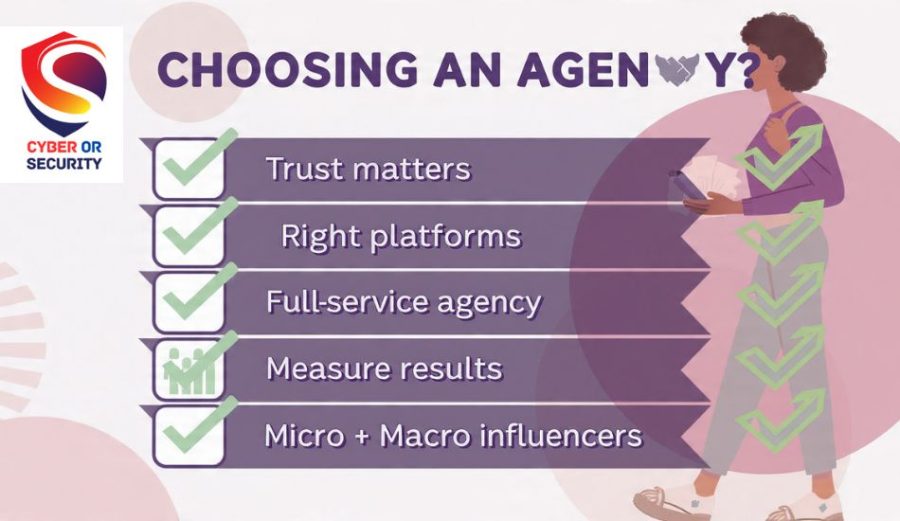
Key Takeaways & How to Choose the Right Cybersecurity Influencer Agency?
Here’s what you need to remember if you want your cybersecurity brand to succeed:
- Trust Is Everything: People listen to influencers like Joseph Steinberg or Chuck Brooks more than brands. Your message works better when delivered by experts.
- Right Platform Matters: Focus on where your audience is active, LinkedIn for professionals, YouTube for deep learning, and Twitter for updates. Instagram can help with awareness, but it isn’t a primary channel for technical trust.
- Services Should Cover Everything: A strong agency will handle influencer selection, campaign management, content creation, trust-building, and analytics. Agencies like AWISEE, Wadi Digital, or Highwire PR do this well.
- Avoid Risks: Never work with unverified influencers, post inaccurate technical claims, or ignore compliance rules like GDPR or SOC 2.
- Measure Results & Social Proof: Always track engagement, leads, and mentions. Social proof is your strongest currency in cybersecurity marketing.
- Micro & Macro Influencers Work Together: Micro influencers bring trust in niche communities; macro influencers expand reach. Combining both creates the best impact.
Simple Rule: Choose the Right Cybersecurity Influencer Agency.
- If you want visibility, you can post anywhere.
- If you want trust and real results, work with a cybersecurity influencer agency that knows the field, the platforms, and the experts.
Conclusion: Cybersecurity Influencer Agency Safe Growth for Security Brands.
Working with a cybersecurity influencer agency is no longer optional if you want your brand to stand out in a crowded and highly technical market. Traditional marketing alone won’t build the trust needed to reach CISOs, IT managers, and security professionals.
By connecting with verified cybersecurity influencers, ethical hackers, and thought leaders like Joseph Steinberg or Chuck Brooks, your brand gains credibility quickly.
Many agencies do more than marketing and select the right influencers, craft accurate and engaging content, manage campaigns, and measure results.
So, the simple truth is that a cybersecurity influencer agency, trust beats visibility. Influencer campaigns place your brand in the hands of trusted voices, turning awareness into credibility, and engagement into results.
Start focusing on the right people, platforms, and strategies today, and your cybersecurity brand will not only be seen but also be believed.
Relevant Article: Cybersecurity Marketing Experts: How to Find the Right One for Your Business?
FAQs: Cybersecurity Influencer Agencies
1. What is a cybersecurity influencer agency?
A cybersecurity influencer agency connects brands with trusted experts, ethical hackers, CISOs, and influencers. They create campaigns that build trust, not just awareness, on platforms like LinkedIn and YouTube.
2. Why should I use one instead of regular marketing?
In cybersecurity, people trust experts more than brands. Influencer agencies help you reach the right audience through credible voices, which builds authority and drives engagement faster than standard marketing.
3. How much do cybersecurity influencer agencies cost?
Costs vary depending on services, influencer reach, and campaign scale. Some agencies work on a monthly retainer, while others charge per campaign or influencer. Micro influencer campaigns can start smaller, while macro influencer campaigns cost more.
4. Which platforms are best for cybersecurity influencer campaigns?
LinkedIn is best for professionals, decision-makers, and CISOs. YouTube is great for tutorials and deep technical explanations. And Twitter is useful for real-time updates and discussions. Instagram Limited use for awareness; not ideal for technical trust.
5. How do I know if an influencer is trustworthy?
A trustworthy influencer has verified credentials, experience in cybersecurity, and a history of accurate content. Agencies like Cyfluencer vet these influencers before campaigns.
6. Can influencer campaigns guarantee results?
No campaign can guarantee results. But using verified influencers and targeting the right audience increases engagement, trust, and qualified leads significantly.
7. What types of influencers work best in cybersecurity?
Both macro and micro influencers work. Micro influencers are trusted in niche communities, while macro influencers help expand reach. Combining both gives strong results.
8. Are there risks in cybersecurity influencer marketing?
Yes. Using unverified influencers, sharing inaccurate technical information, ignoring compliance (GDPR, SOC 2), or posting on the wrong platform can harm your brand. A skilled agency mitigates these risks.