How to Learn Ethical Hacking in the Future can feel confusing when you are a student and do not know where to start. Ever watched a movie where a hacker breaks into a system in seconds?
Real hacking looks nothing like that. But here’s the fun part!
You can learn to do it for real, and it’s legal. Companies pay people called ethical hackers to find weak spots before criminals do. If you want to know how to learn ethical hacking as a future path, you’re in the right place.
You don’t need a big budget. You don’t need a computer science degree. You just need a plan and some free tools, which this guide will give you.
You may see Kali Linux, hacking tools, coding, networks, and security labs all at once. Then you may wonder, What should I learn first?
You do not need to learn everything at once.
Start with the basics. Learn how computers, networks, websites, and operating systems work. Then move on to ethical hacking basics, such as identifying security weaknesses and understanding how attacks occur. After that, you can practice safely in legal training labs.
Many free ethical hacking resources can help you begin. You can learn Linux commands, basic networking, web security, and simple security testing without buying expensive courses.
A Kali Linux beginner can also use the system to explore security tools, but tools should come after you understand what they do and why you are using them.
The safest way to build real skills is through hands-on practice. Platforms such as TryHackMe give you guided labs where you can learn in a legal environment. You can study topics like Linux, networking, web vulnerabilities, reconnaissance, and penetration testing step by step.
Your goal is not to “hack everything.” Your goal is to understand how systems can fail, how security teams find those weak points, and how they can be fixed. With the right learning path, free resources, and regular practice, you can start building ethical hacking skills from zero in the future.
What Is Ethical Hacking?
Ethical hacking means breaking into systems the right way. You get permission first. Then you look for holes in a website, app, or network. When you find one, you report it. This helps the owner fix it before a real criminal finds it. People call this “white hat” hacking. It’s the opposite of “black hat” hacking, which is illegal and harmful.
Ethical hackers work for banks, hospitals, tech companies, and even governments. Some work full-time. Others do it as a side job through “bug bounty” programs, where companies pay you for each bug you find.
Why You Should Learn Ethical Hacking the Right Way
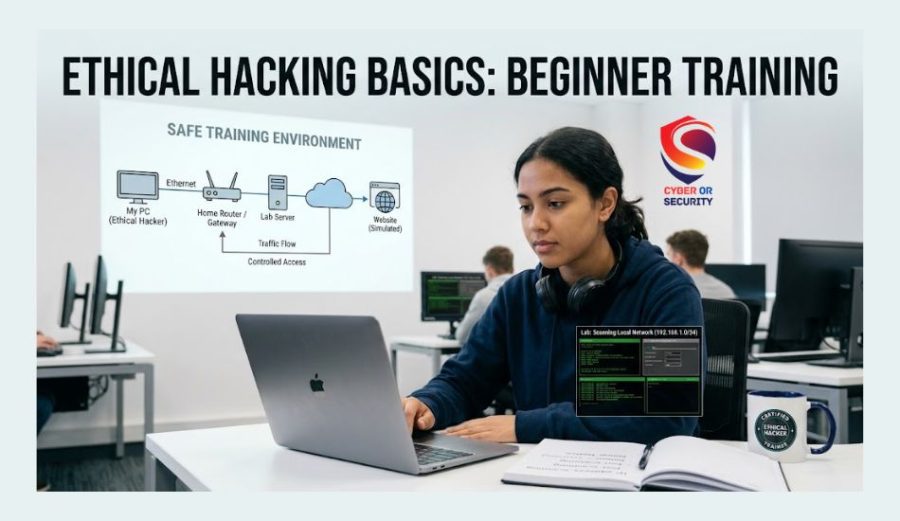
Before you install Kali Linux or run your first security tool, you need to understand one important thing: ethical hacking is about permission and safety.
You learn how attackers may find weak points in a system. Then you use that knowledge to help protect the system. This is why ethical hackers are often called white hat hackers.
You should only test:
- Your own computer or network
- A system where you have clear permission
- A legal training lab
- A practice platform built for cybersecurity learning
Do not test random websites, Wi-Fi networks, or other people’s accounts. Even if you only want to learn, testing a system without permission can cause real problems.
You do not need to take that risk to build real skills. Safe practice labs let you learn how vulnerabilities work without harming anyone.
As you move forward, focus on understanding how a system works before you try to test it. This gives you a much stronger base. You will learn networking first, then operating systems, web technologies, security concepts, and finally hands-on penetration testing.
That path may feel slower at first. In the long run, it helps you become a better ethical hacker.
Why Learn Ethical Hacking in the Future?
Cyberattacks keep growing every year. That means companies need more people who can find and fix problems. This is good news for you. Even entry-level jobs in this field can pay well. And you don’t need to wait years to start learning. Many students land internships or junior roles within a year of serious practice.
Better yet, the tools have never been easier to access. A few years ago, you needed pricey courses and lab setups. Today, sites like TryHackMe let you practice real hacking skills in your browser, for free.
Start With the Core Skills First
You may want to install Kali Linux and start using hacking tools right away. But that can make learning harder.
Before you use security tools, learn how the technology behind them works.
Think of it like fixing a car. You cannot easily find the problem if you do not know what the engine does.
1. Learn Basic Networking
Start by learning how computers talk to each other.
Focus on:
- IP addresses
- DNS
- Ports
- TCP and UDP
- HTTP and HTTPS
- Routers and firewalls
For example, when you open a website, your computer sends a request across a network. Understanding that simple process will help you later when you study web security and network attacks.
2. Learn Linux Basics
Linux is an important skill for ethical hackers. Many security tools run on Linux, and Kali Linux is built for security testing.
As a Kali Linux beginner, do not try to learn every tool on day one.
Start with simple commands. Learn how to:
- Move between folders
- Create and delete files
- View file permissions
- Run programs
- Understand users and groups
Once you understand basic Linux commands, Kali Linux will feel much less confusing.
3. Understand How Websites Work
Web security is a major part of ethical hacking.
Learn the basic parts first:
- HTML
- CSS
- JavaScript
- Web servers
- HTTP requests
- Cookies
- Login systems
You do not need to become a web developer. You only need to understand how a website works before you learn how security weaknesses can affect it.
These core skills give you a strong base. Once you understand them, you can move on to hands-on labs and start practicing ethical hacking in a safe environment.
Build Your First Safe Ethical Hacking Lab
Now that you understand the basic skills, you need a safe place to practice.
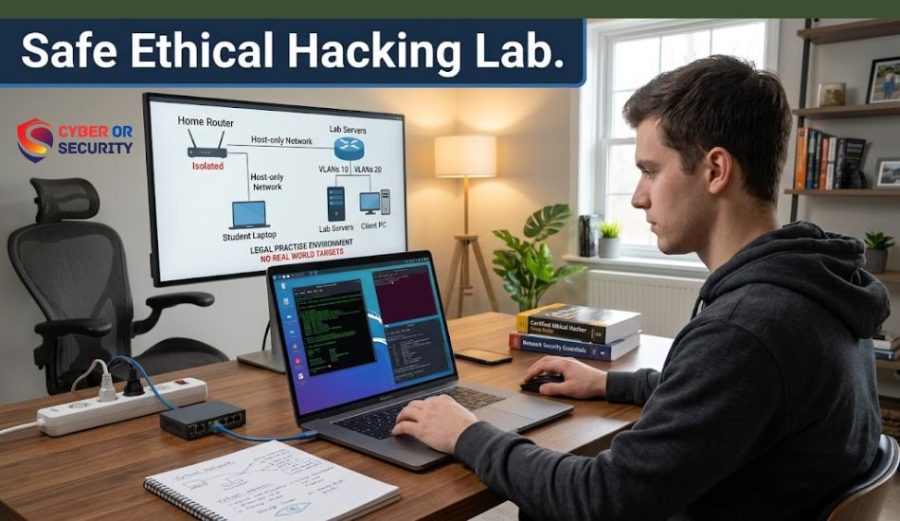
Do not test random websites or computers. Instead, build your own ethical hacking lab. This gives you a place to learn, make mistakes, and test your skills without putting anyone at risk.
1. What You Need to Start
You do not need an expensive computer.
A basic setup may include:
- Your computer
- A virtual machine program
- Kali Linux
- A safe practice target
- An internet connection
A virtual machine lets you run another operating system inside your computer. This means you can use Kali Linux without replacing your main system.
2. Start With Kali Linux Slowly
As a Kali Linux beginner, do not install it and start running every tool you find.
First, learn how to:
- Open the terminal
- Use basic Linux commands
- Update the system
- Create folders and files
- Understand file permissions
Kali Linux includes many security tools. You do not need to learn them all. Pick one topic at a time and understand what each tool does before using it.
3. Use Legal Practice Labs
The best way to learn is by doing. Safe training platforms give you systems that are made for practice.
You can use guided labs to learn about:
- Networking
- Linux
- Web security
- Password security
- Common vulnerabilities
- Basic penetration testing
TryHackMe is one option that provides guided learning paths and hands-on cybersecurity labs. You can start with beginner lessons and build your skills step by step.
Your first goal is simple way learn how to use the lab, understand the task, and find out why a security weakness exists.
You do not need to become an expert in one week. Practice one skill at a time. Small steps will help you build real ethical hacking skills.
How to Learn Ethical Hacking: Step-by-Step
Step 1: Learn How Computers and Networks Work
Before you hack anything, learn how it works. Start with the basics: what is an IP address, what is a server, and how do websites load? You don’t need to master this. Just get comfortable with the ideas. Free YouTube channels and beginner blog posts cover this well.
Step 2: Learn Basic Linux Commands
Most hacking tools run on Linux, not Windows. Don’t worry, it’s simpler than it sounds. Start by learning how to move between folders, list files, and run basic commands. You can practice this for free on sites like OverTheWire’s “Bandit” game, which teaches Linux through fun puzzles.
Step 3: Install Kali Linux
Kali Linux is a free operating system built just for hacking practice. It comes packed with tools already installed, so you don’t have to hunt them down one by one. This step scares a lot of beginners, but it’s easier than it looks. We’ll walk through it in the Kali Linux beginner section below.
Step 4: Learn Basic Networking
Networking is how computers talk to each other. Learn simple terms like IP address, port, firewall, and DNS. You’ll see these words everywhere once you start practicing labs. Free resources like Professor Messer’s videos explain this in plain English.
Step 5: Practice on TryHackMe
Reading about hacking only gets you so far. You need to actually do it. TryHackMe is one of the best places to start. It has guided rooms built for total beginners, with step-by-step instructions. Many rooms are free, and you can upgrade later if you want extra content. Sign up for TryHackMe here and try the “Pre Security” learning path first. It was built for people who have never hacked anything before.
Step 6: Learn a Little Scripting
You don’t need to become an expert coder. But learning a bit of Python and Bash will save you time. Scripts help you automate boring tasks, like scanning many websites at once. Start small. Learn how to write a script that prints text or reads a file, then build up from there.
Step 7: Join Many Social Communities
Learning alone is hard. Join a Discord server, subreddit, or student group focused on ethical hacking. You’ll get help when you’re stuck, and you’ll see how other beginners think through problems. This also keeps you motivated when things feel slow.
Step 8: Try Capture the Flag (CTF) Challenges
CTFs are hacking games. You solve puzzles to find hidden “flags,” which are secret codes proving you found the bug. They sound scary, but beginner CTFs are made to teach, not to trick you. TryHackMe and PicoCTF both offer beginner-friendly CTF challenges for free.
Free Ethical Hacking Resources for Beginners
Here are some of the best free ethical hacking resources for students who are just starting:
- TryHackMe: guided, beginner-friendly hacking labs (free plan available)
- PicoCTF: a free CTF platform made for students, run by Carnegie Mellon University
- OverTheWire: free wargames that teach Linux and basic hacking step by step
- Hack The Box Academy: free beginner modules on hacking concepts
- Cybrary: free introductory cybersecurity courses
- OWASP: free guides on common website security flaws
- YouTube channels like NetworkChuck and John Hammond offer free video tutorials for beginners
You don’t need to use all of these at once. Pick one or two, and stick with them until the basics feel easy.
Best Free Ethical Hacking Resources for Beginners
You do not need to spend a lot of money to start learning ethical hacking.
Many good free ethical hacking resources can help you build your skills. The key is to use them in the right order. If you jump between random videos, tools, and courses, you may feel lost.
Start with one topic. Learn the basics. Then practice what you learned.
1. TryHackMe for Guided Practice
TryHackMe is a good starting point when you want guided cybersecurity lessons and hands-on labs.
You can learn about:
- Cybersecurity basics
- Linux
- Networking
- Web security
- Security tools
- Penetration testing
The lessons can help you understand what you are doing instead of simply copying commands.
Start with beginner topics. Take your time. Repeat a lab if something does not make sense.
2. Kali Linux for Learning Security Tools
As a Kali Linux beginner, you do not need to learn every tool that comes with the system.
Focus on the basics first.
Learn how to use Linux. Then explore security tools when you understand their purpose. For example, you may first learn how networks and ports work. After that, you can safely study tools used to inspect systems inside your own lab or an authorized training environment.
3. OWASP for Web Security Knowledge
OWASP provides free information about common web security risks.
You can use its learning materials to understand problems that may affect websites and web apps.
Focus on understanding:
- How web applications work
- Common security weaknesses
- Why security problems happen
- How developers and security teams can reduce risk
Do not try to memorize everything. Learn one security topic and then practice it in a safe lab.
4. Free Documentation and Cybersecurity Communities
Good documentation can teach you a lot.
When you learn a new tool, read its official documentation. Start with the basic features. Test what you learn in your own lab.
You can also learn from cybersecurity communities, tutorials, and beginner discussions. But be careful when copying commands from the internet. A command may work in someone else’s lab and cause problems on your own system.
Always ask: What does this command do?
If you cannot answer that question, stop and learn before running it.
The best free resource is not always the one with the most lessons. It is the one that helps you understand, practice, and improve.
Once you choose your learning resources, the next step is to build a simple ethical hacking study plan that you can follow each week.

Create a Simple Ethical Hacking Study Plan
You now have free resources and a safe place to practice. The next problem is staying on track.
When you are learning ethical hacking, it is easy to jump from one topic to another. One day, you study Kali Linux. The next day, you watch a video about web hacking. Then you try a tool you do not understand.
A simple study plan can help you avoid that.
1. Start With a Small Weekly Goal
You do not need to study for many hours every day.
Try a simple plan like this:
- Day 1: Learn a new topic.
- Day 2: Practice what you learned.
- Day 3: Repeat the practice.
- Day 4: Learn a related skill.
- Day 5: Complete a beginner lab.
- Day 6: Review your notes.
- Day 7: Take a break or catch up.
Even 30 to 60 minutes of focused practice can help you make steady progress.
2. Follow the Right Learning Order
A good beginner path may look like this:
- Learn cybersecurity basics.
- Understand computer networks.
- Learn Linux basics.
- Understand how websites work.
- Practice in safe labs.
- Learn about common security weaknesses.
- Study basic penetration testing.
Do not worry if another student learns faster than you. Ethical hacking is a large field. You do not need to know everything.
Your goal is to understand one topic before moving to the next.
3. Track What You Learn
Keep a simple record of your progress.
Write down:
- Topics you finished
- Labs you completed
- Linux commands you learned
- New security terms
- Problems you could not solve
- Topics you want to review
This helps you see your progress over time.
4. Build a Habit, Not a Race
The best study plan is one you can actually follow.
You may study every day. Or you may only have time a few days each week. Both can work.
What matters is regular practice.
If you spend a few months learning the basics and practicing in legal labs, you can build a much stronger base than someone who rushes through dozens of tools without understanding them.
Next, you can learn which ethical hacking skills and beginner tools are worth studying first and which ones you should leave for later.
Which Ethical Hacking Skills and Tools Should You Learn First?
You do not need to learn every hacking tool.
That is a common beginner mistake. Kali Linux has many tools, and the internet has thousands more. Trying to learn them all can leave you confused.
Instead, learn the skill first. Then learn the tool that helps you practice that skill.
1. Learn Information Gathering First
Before a security test begins, you need to understand the target system.
In your own lab or an authorized practice environment, learn how to find basic information such as:
- Domain and IP details
- Open services
- Network information
- Website technologies
This helps you understand what is running on a system.
2. Learn Basic Network Scanning
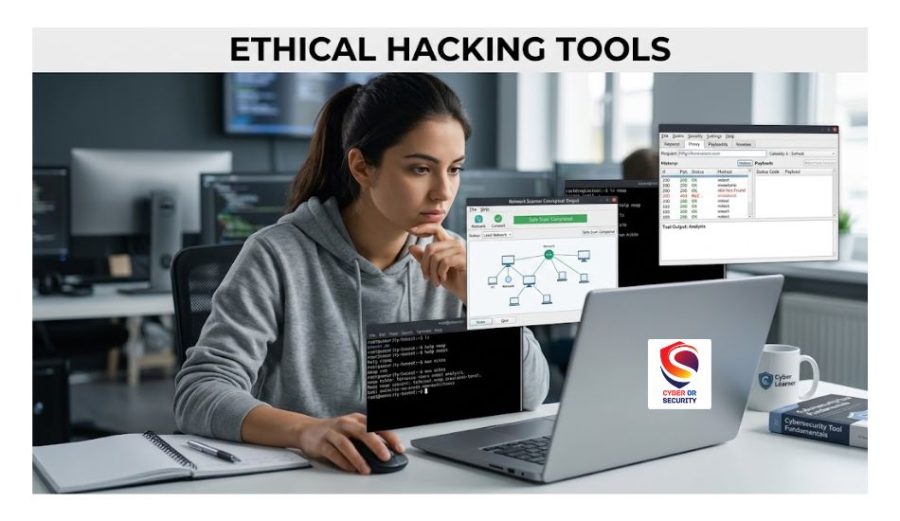
After learning networking, you can practice scanning inside a safe lab.
Your goal is not to run random commands. You should understand:
- What a port is
- Why a port may be open
- And what service is using the port
- Why an open service may create a security risk
A tool is only useful when you understand the results.
3. Learn Web Security Basics
Websites and web apps are common targets for security testing.
Start by learning how:
- Login pages work
- Forms send data
- Cookies store information
- User input can create security problems
- Servers process requests
Then practice finding simple weaknesses in legal training labs.
4. Learn Basic Scripting
You do not need to become a software developer first.
However, basic scripting can make your work easier. Start with simple languages such as Python or Bash.
Learn how to:
- Read simple code
- Change small scripts
- Work with files
- Automate simple tasks
Even basic coding skills can help you understand how security tools work.
5. Do Not Collect Tools Without Learning
Installing many tools does not make you an ethical hacker.
If you find a new tool, ask yourself:
- What problem does it solve?
- How does it work?
- Where can I practice using it safely?
Learn one skill. Practice it. Understand the result. Then move forward.
This approach will help you build real skills instead of becoming someone who only copies commands from a tutorial.
Next, you need to understand the most common mistakes beginners make when learning ethical hacking and how you can avoid wasting time.

Common Ethical Hacking Mistakes Beginners Should Avoid
When you start learning ethical hacking, mistakes are normal.
The problem is not making mistakes. The problem is spending weeks learning the wrong way and getting nowhere.
Here are some common mistakes you should avoid.
1. Starting With Tools Instead of Basics
You may see a popular hacking tool and want to use it right away.
But if you do not understand networks, Linux, or web systems, the results may look like random text.
Learn how the system works first. Then learn the tool.
For example, understand what an IP address and a port are before you practice network scanning in a legal lab.
2. Trying to Learn Everything at Once
Ethical hacking covers many areas.
You may find topics like:
- Web security
- Network security
- Linux
- Cloud security
- Malware analysis
- Wireless security
You do not need to learn all of them today.
Pick one path. Build your basic skills. Then explore other areas later.
3. Copying Commands Without Understanding Them
You may find a command online and copy it into Kali Linux.
It may work. But do you know what it did?
Always stop and ask:
- What does this command do?
- What system will it affect?
- Am I allowed to run it here?
If you do not understand the answer, learn first.
4. Practicing on Systems Without Permission
This is one of the biggest mistakes.
Never test a website, network, account, or computer without clear permission.
Use:
- Your own lab
- Intentionally vulnerable practice machines
- Authorized training platforms
- Systems where you have permission to test
Ethical hacking depends on permission. Without it, your test may no longer be ethical or legal.
5. Watching Too Much and Practicing Too Little
Videos can teach you useful ideas. But watching alone will not build strong skills.
After learning something new, try it in a safe lab.
Make mistakes. Read the results. Try again.
That is how you turn information into a real skill.
6. Giving Up When a Lab Feels Hard
You will get stuck.
A command may fail. A lab may not make sense. You may spend an hour looking for a small mistake.
That is part of learning.
Take a break if you need one. Read the lesson again. Use a hint when it is available. Then try to understand the answer instead of only copying it.
You do not need to be perfect. You need to keep learning.
Once you avoid these common mistakes, you can focus on the next important step: choosing an ethical hacking path that matches the type of cybersecurity work you want to do.
Choose Your Ethical Hacking Learning Path
1. What to Learn After the Basics
Once the fundamentals feel solid, you can start thinking about certifications. Entry-level options like eJPT (eLearnSecurity Junior Penetration Tester) are built for beginners moving toward their first job.
More advanced options, like OSCP, come later, once you have real hands-on hours under your belt. There’s no rush. Focus on building real skills first, and certifications will make more sense once you have them.
After learning the basics, you may ask yourself a simple question:
What should I learn next?
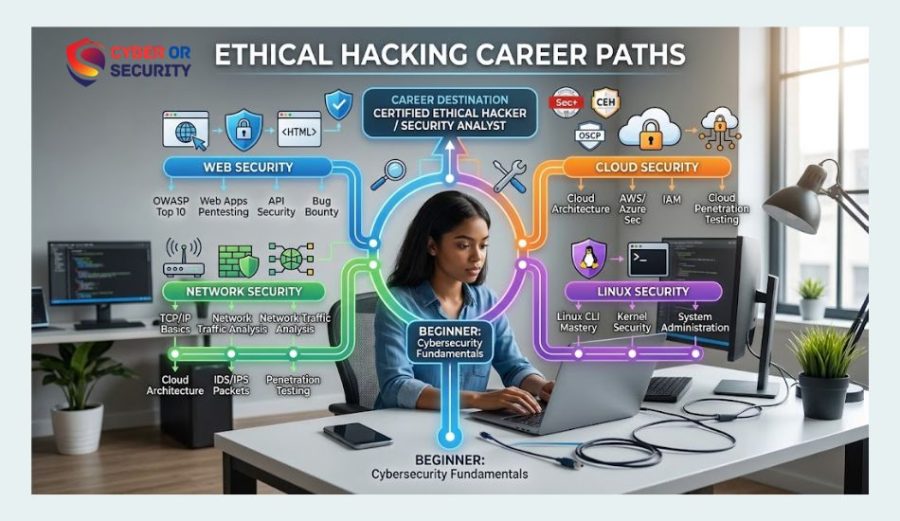
Ethical hacking is a large field. You do not need to study every area at the same time. As your skills grow, you can choose a path that interests you.
1. Web Application Security
If you enjoy websites and web apps, this path may suit you.
You can learn how websites handle:
- User input
- Login systems
- Sessions and cookies
- Data sent between browsers and servers
- Common web security weaknesses
Start by understanding how a web application works. Then practice finding and understanding security issues in safe training labs.
2. Network Security
If you enjoy learning how computers connect, network security may be a good path.
You can study:
- IP addresses
- Ports
- Network services
- Firewalls
- Network traffic
- Common network security problems
Your networking skills will help you understand how devices communicate and where security risks may appear.
3. Linux and System Security
Linux is useful in many cybersecurity roles.
You can learn more about:
- File permissions
- Users and groups
- Running services
- System logs
- Basic system security
This path can help you understand how operating systems work and how security teams protect them.
4. Cloud Security
Many companies now use cloud services to run websites, apps, and business systems.
As you gain more experience, you may want to learn how cloud systems manage:
- User access
- Data
- Applications
- Security settings
- Permissions
Cloud security is better to explore after you understand basic networking, Linux, and security concepts.
You Do Not Need to Choose Forever
Your first learning path does not have to be your final career choice.
Start with the area that makes you curious. Practice it for a while. Then explore other parts of cybersecurity.
For now, keep your goal simple. Build strong basics, practice in legal labs, and learn how to understand security problems.
As your skills improve, you will begin to see which part of ethical hacking you enjoy most. From there, you can build greater skills and create a clear path toward real cybersecurity work.

Build a Portfolio and Show What You Have Learned
Learning ethical hacking is important. Showing your skills is also important.
You may complete many labs and courses. But later, you may want to show a teacher, mentor, or future employer what you have actually learned.
A simple cybersecurity portfolio can help.
1. Write About Your Practice
After you finish a safe lab, write a short note about it.
You can include:
- What you were learning
- What problem you found
- How you investigated it
- What you learned
- How the problem could be fixed
Do not share passwords, private data, or details from systems you were not allowed to test.
Your portfolio should focus on authorized labs, your own projects, and legal practice environments.
2. Create Simple Write-Ups
You do not need to write a long report.
A simple format can work:
- Challenge: What was the task?
- What I learned: Which skill did you practice?
- My approach: How did you solve the problem?
- Lesson: What did the result teach you?
This helps you remember your work and explain your thinking.
3. Keep Track of Your Progress
Your first write-ups may be simple. That is okay.
As you learn more, you can look back and see how far you have come. You may notice that topics that once felt confusing now seem easy.
You can also build small projects around skills such as:
- Linux basics
- Network monitoring
- Web security concepts
- Python or Bash scripting
- Home lab setup
- Security log analysis
Keep every project safe and legal.
4. Focus on What You Understand
Do not copy someone else’s project and call it your own.
Your portfolio does not need to look perfect. It should show your real learning.
A small project that you fully understand is more useful than a large project that you cannot explain.
As you build skills, labs, and projects, you will have proof of your progress. The next step is learning how to keep improving your ethical hacking skills and move from beginner practice toward real-world cybersecurity knowledge.

Keep Improving Your Ethical Hacking Skills
Reaching the end of a beginner course does not mean your learning is over. Ethical hacking keeps changing. New software, security problems, and defense methods appear over time. Your goal is to keep building your knowledge without feeling that you must learn everything at once.
1. Learn One New Skill at a Time
Choose one area and spend time understanding it. For example, you might focus on:
- Linux administration
- Networking
- Web application security
- Python or Bash scripting
- Cloud security
- Security monitoring
Learn the basics first. Then practice in your own lab or another authorized environment.
2. Repeat Old Labs
Do not always rush to a new challenge. Go back to a lab you completed before. Try to solve it again without looking at your old notes. This can help you see what you truly remember. If you forget something, that is okay. Review it and try again.
3. Read Security Reports and Write-Ups
As your knowledge grows, start reading real security reports, vulnerability write-ups, and technical articles. You may not understand everything at first.
Focus on simple questions:
- What was the security problem?
- Why did it happen?
- How was it found?
- How was it fixed?
Over time, you will begin to understand more technical details.
4. Join the Learning Community
Learning with other people can also help. You can follow cybersecurity discussions, join beginner communities, and learn from people who share safe and legal research.
Ask questions when you get stuck. Share what you have learned. But always check information before you trust it or run a command.
5. Keep Practicing
The best way to improve is to combine learning with practice.
Read about a topic. Try it in a safe lab. Take notes. Then repeat.
That simple cycle can help you build strong skills over time.
You do not need to know every tool or every security topic. If you keep learning the basics, practicing safely, and building on what you already know, you will continue moving from a beginner toward real cybersecurity knowledge.
Next, you can bring everything together with a simple ethical hacking roadmap for beginners, showing what to learn first, what to practice next, and how to keep moving forward.

Your Future Ethical Hacking Roadmap
You now have the main pieces. The next step is to put them in the right order.
You do not need to finish everything in one month. Use this roadmap as a guide. Move forward when you understand the current topic and can practice it safely.
Stage 1: Learn Computer Basics
Start by understanding how your computer works.
Learn about:
- Operating systems
- Files and folders
- Users and permissions
- Basic troubleshooting
This gives you a base for Linux and system security.
Stage 2: Learn Networking
Next, learn how devices communicate.
Focus on:
- IP addresses
- DNS
- TCP and UDP
- Ports
- HTTP and HTTPS
- Routers and firewalls
You will use these ideas again and again in ethical hacking.
Stage 3: Learn Linux
Now build your Linux skills.
Start with basic terminal commands. Learn files, permissions, users, processes, and services.
Then explore Kali Linux.
Do not treat Kali Linux as a shortcut to hacking. It is a platform with security tools. Your knowledge matters more than the tools.
Stage 4: Learn Web Security
Learn how websites and web apps work.
Study:
- Requests and responses
- Cookies and sessions
- Authentication
- User input
- Common web vulnerabilities
Practice only in authorized labs.
Stage 5: Start Hands-On Labs
Now spend more time practicing.
TryHackMe can help you follow guided learning paths and practice cybersecurity skills in controlled environments.
Start with beginner rooms. Take notes. Repeat difficult challenges instead of rushing through them.
Stage 6: Learn Basic Scripting
Once you have a good foundation, start learning simple Python or Bash.
You do not need advanced programming skills. Learn enough to read code, change simple scripts, work with files, and automate small tasks.
Stage 7: Choose a Specialization
After learning the basics, choose an area that interests you.
You might explore:
- Web application security
- Network security
- Linux security
- Cloud security
- Security testing
Your first choice does not have to be permanent.
A Simple Learning Order
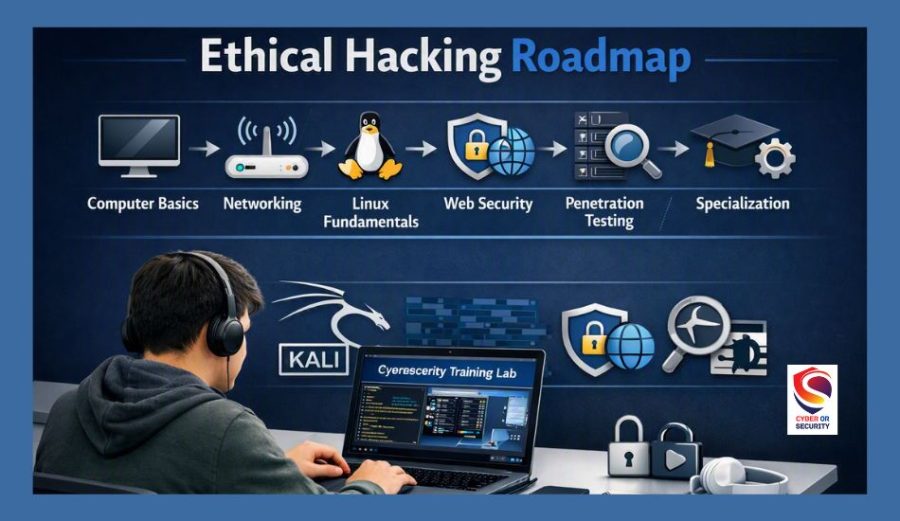
Computer basics → Networking → Linux → Web security → Safe labs → Scripting → Specialization
Follow that order, and you will have a much clearer path than trying random hacking tools from the start.
The most important part is consistency. You do not need to become an ethical hacker overnight. You need to keep learning, practice legally, and understand why each step works.
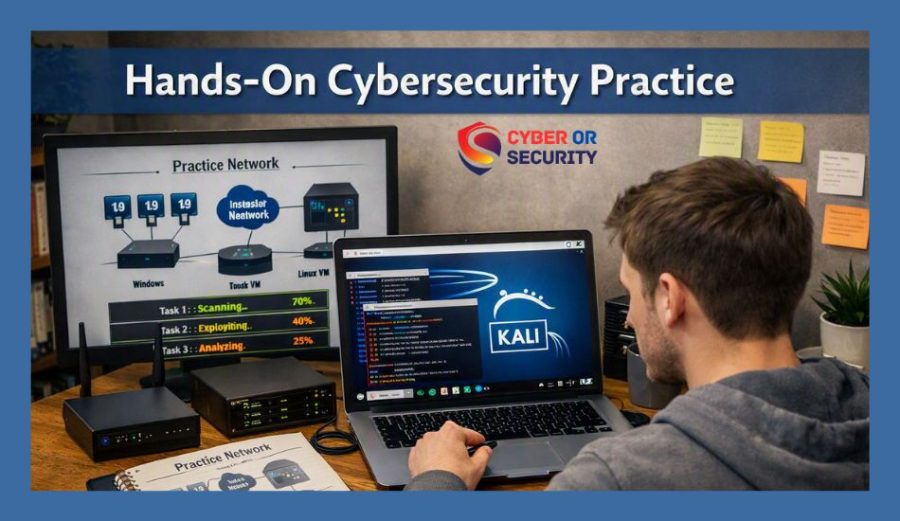
How Long Does It Take to Learn Ethical Hacking?
You may want to know how long it will take before you can call yourself an ethical hacker.
There is no fixed number.
Your progress depends on your starting skills, study time, and how often you practice. If you are a student starting from zero, focus less on the calendar and more on what you can actually do.
1. Your First Month
Start with the foundation.
You can spend this time learning:
- Computer basics
- Networking basics
- Linux commands
- Basic cybersecurity terms
Do not rush into advanced penetration testing.
Your goal is to understand the technology first.
2. Months Two and Three
Now add hands-on practice.
You can begin working through beginner labs on TryHackMe and similar legal training environments.
Practice tasks related to:
- Linux
- Networking
- Web security
- Basic reconnaissance
- Common vulnerabilities
Keep notes as you work.
3. After Three Months
If you practice regularly, you can start exploring more focused topics.
You might study:
- Web application security
- Network security
- Basic penetration testing
- Python or Bash scripting
- Security tools
At this point, you should be able to explain basic security concepts instead of only following instructions.
Do Not Compare Your Progress
One student may learn faster because they already know Linux or programming. Another may need more time.
That is normal.
You do not need to finish a certain number of labs to become “good enough.” Your real progress comes from understanding what you are doing and being able to repeat the skill without blindly following a guide.
A better question is: “What can I understand and practice today that I could not do last month?”
If the answer keeps growing, you are moving in the right direction.
How to Know You Are Ready for the Next Level
You do not need to master every cybersecurity topic before moving forward.
Instead, check if you understand the skills you have already studied. This can help you avoid moving into advanced topics too soon.
1. Test Yourself Without a Tutorial
After finishing a beginner lab, try a similar task without following the steps.
Ask yourself:
- Can you explain what you are doing?
- Can you explain why you are doing it?
- And can you understand the result?
- Can you find a simple mistake when something fails?
- Can you explain how the security problem could be fixed?
If you can answer most of these questions, your foundation is getting stronger.
2. Know When to Go Back
Sometimes you will reach a topic and realize that your basics are weak.
For example, a web security lesson may suddenly mention DNS, HTTP requests, Linux permissions, or ports.
Do not skip over those terms.
Go back. Learn the missing idea. Then return to the lab.
This may feel like going backward, but it is actually part of learning.
3. Try Small Challenges
You can also test yourself with small, legal challenges.
Start with tasks where you already know the basic concepts. Then slowly increase the difficulty.
Your aim is not to solve everything quickly. You aim to understand your process.
If you get stuck, use a hint or read the solution. Then close it and try the task again yourself.
4. Look for Understanding, Not Just Completion
Finishing 50 labs does not automatically mean you have strong ethical hacking skills.
If you can clearly explain one completed lab, understand the security issue, and repeat the basic process yourself, you are building something useful.
Keep following this approach as the challenges become harder.
Your learning should move from “show me what to do” toward “I understand what I need to investigate and why.”
That change is an important sign that you are moving beyond the beginner stage.
What to Do After You Learn the Basics
Once you understand networking, Linux, web security, and basic ethical hacking, you can start thinking about your next step.
You do not need to jump straight into advanced hacking.
First, use what you have learned in small, safe projects.
1. Build Your Own Security Projects
A small home lab can give you useful practice.
You could set up a few virtual machines to study how systems communicate. You can also practice basic Linux administration, network monitoring, and security testing in that lab.
Keep everything under your control or use systems where you have clear permission.
2. Start Reading Security Findings
You can learn a lot from real vulnerability reports.
When you find a report, focus on four questions:
- What was the weakness?
- Why did it happen?
- How could someone abuse it?
- How could the owner fix it?
You do not need to understand every technical detail at first.
The goal is to learn how security researchers think about a problem.
3. Learn How to Report a Finding
Finding a vulnerability is only part of ethical hacking.
You also need to explain it clearly.
A basic security report can include:
- Finding: What security issue did you identify?
- Impact: Why does it matter?
- Evidence: What did you observe in the authorized test?
- Fix: What can reduce or remove the risk?
Good reporting is a valuable skill because security teams need clear information before they can fix a problem.
4. Explore Bug Bounty Programs Carefully
Later, you may want to explore bug bounty programs.
These programs allow security researchers to test approved targets under specific rules. Always read the program’s scope and rules before testing anything.
A target being visible on the internet does not mean you have permission to test it.
Start with programs that clearly explain what you may test and what methods are allowed.
5. Keep Building Your Skills
At this stage, you can start connecting your knowledge.
Networking helps you understand traffic. Linux helps you understand systems. Web knowledge helps you understand applications. Scripting can help you automate simple tasks.
That is when ethical hacking starts to make more sense.
You are no longer learning isolated commands. You are learning how different parts of a system fit together and where security problems may appear.
From here, your next goal should be to turn your learning into a repeatable practice routine that keeps your skills fresh.
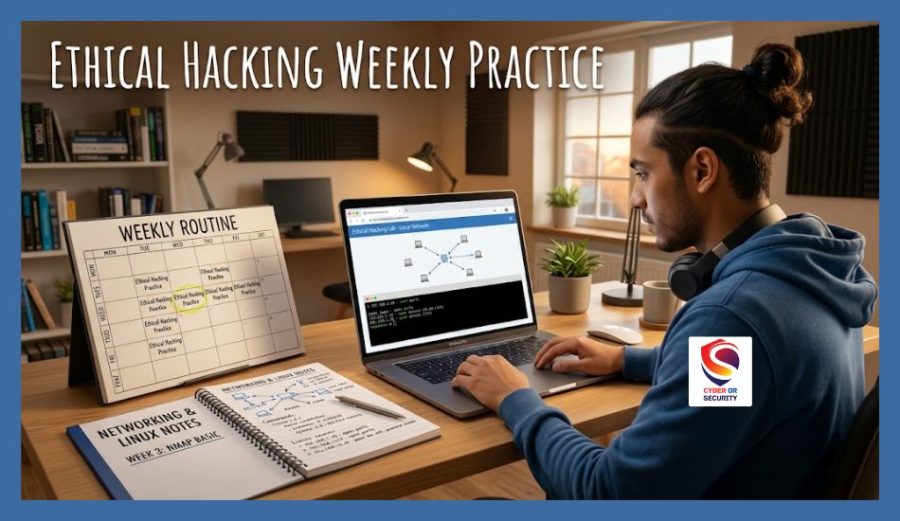
A Simple Weekly Ethical Hacking Practice Routine
You do not need to study for hours every day to improve.
A simple routine can work better than long study sessions that you cannot maintain. Set a small goal for each week and give yourself enough time to understand it.
Monday: Learn One New Concept
Pick one topic.
For example, you could study:
- IP addresses
- Linux permissions
- HTTP requests
- Cookies
- Network ports
Read a beginner lesson and write down the key idea in your own words.
Tuesday: Practice the Concept
Use a safe lab to practice what you learned.
- If you studied Linux permissions, work with permissions in your own virtual machine.
- If you studied HTTP, use an authorized web security lab to see how requests and responses work.
The goal is to connect the lesson with real practice.
Wednesday: Repeat
Try the same task again without looking at the instructions.
- This small step matters.
- You may discover that you understood less than you thought.
- That is useful information.
- Review the topic and try again.
Thursday: Learn a Related Skill
Add one small piece to your knowledge.
- For example: Networking → ports → services → basic scanning
- Or: Web basics → HTTP → cookies → sessions.
Learning connected topics makes it easier to remember them.
Friday: Complete a Lab
Use a beginner-friendly platform such as TryHackMe to complete an authorized challenge.
Do not focus only on getting the answer.
Ask why the result happened and what security lesson the challenge is teaching.
Saturday: Write Your Notes
Spend a little time reviewing your week.
Write down:
- What you learned
- What confused you
- Which lab you completed
- Which commands you used
- What you need to study again
These notes can become a useful personal reference later.
Sunday: Review or Rest
You can review difficult topics or take a break.
Rest is not wasted time. If you return to your studies with a clear mind, you may understand problems that felt difficult before.
Keep the Routine Flexible
Your schedule may change during exams, work, or other commitments.
That is fine.
If you only have 30 minutes, use those 30 minutes well. Learn one thing. Practice it. Write down what you found.
Over several months, these small sessions can add up to a strong foundation.
The final goal is not to finish a course as quickly as possible. It is to build skills that you can understand, practice, and use responsibly.
Start Learning Ethical Hacking Today
You do not need to know everything before you begin. If you are starting from zero, focus on the basics first. Learn how computers and networks work. Build your Linux skills. Understand how websites work. Then use safe labs to practice what you learn.
Your learning path can be simple: Learn → Practice → Review → Repeat.
Use free ethical hacking resources to build your foundation. When you are ready for guided hands-on practice, TryHackMe can help you work through cybersecurity lessons and legal labs.
Do not rush toward advanced tools. A tool is only useful when you understand what it does and when you have permission to use it.
You may get stuck. You may forget commands. Some labs may take much longer than you expect. That is normal.
Keep going. If you spend time learning the right skills and practicing them in safe environments, you can build a strong ethical hacking foundation in 2026. Your first goal is not to become an expert. Your first goal is to understand one new security idea and use it correctly.
Start with one lesson today. Then practice it.

Final Takeaway: Your Ethical Hacking Journey Starts Small
You do not need expensive tools or advanced skills to start learning ethical hacking in the future.
Start with the basics. Learn networking, Linux, web security, and simple scripting. Then put those skills to work in safe, legal labs.
If you feel confused at first, do not stop. You are learning several new ideas at once. Give yourself time to understand them.
Your next step can be very simple:
- Pick one beginner topic.
- Study it.
- Practice it in an authorized lab.
- Write down what you learned.
- Repeat the process.
For guided hands-on practice, you can explore TryHackMe and start with its beginner-focused cybersecurity content.
Focus on the main rule: only test systems you own or have clear permission to test.
Your goal is not to become a hacker overnight. You are building a skill that grows with practice.
Start small today. Keep learning. Keep practicing. Let your skills grow one safe challenge at a time.
Relevant article: What Is Ethical Hacking? Beginner’s Introduction
FAQs About Learning Ethical Hacking
You may still have a few questions before you begin. These answers can help you choose your next step without feeling overwhelmed.
1. Can I Learn Ethical Hacking for Free?
Yes, you can learn many beginner skills without paying for a course. You can use free lessons, documentation, cybersecurity communities, and practice labs. Platforms such as TryHackMe also offer beginner content and hands-on practice. You may eventually choose paid training, but you do not need to buy an expensive course to get started.
2. Do I Need to Know Programming?
No, you can start learning ethical hacking without being a programmer. Basic Python or Bash can become useful later. For now, focus on computer basics, networking, Linux, and web technologies. Once you understand those areas, simple scripting will be easier to learn.
3. Is Kali Linux Required to Learn Ethical Hacking?
No, Kali Linux is popular because it includes many security tools. But Kali itself does not teach you ethical hacking. You can begin with basic Linux skills and then use Kali when you are ready to practice security tools. If you are a Kali Linux beginner, focus on understanding Linux before trying advanced tools.
4. How Many Hours Should I Study Each Day?
There is no required number. Even 30 to 60 minutes of focused study can help if you practice regularly. If you have more time, you can study longer. Your consistency matters more than trying to study for many hours once a week.
5. Can I Practice Ethical Hacking on Any Website?
No, you should only test systems that you own or systems where you have clear permission to test. Use your own lab, authorized training platforms, or approved security programs. A website being public does not permit you to test it.
6. Is Ethical Hacking a Good Career for Students?
It can be a useful career path if you enjoy computers, problem-solving, and security. You can start by building basic skills and practicing in legal labs. Later, you can explore areas such as penetration testing, web security, network security, cloud security, or security research. Do not worry about choosing a final career path on your first day. Start learning and see which area interests you most.
7. What Should I Learn First?
Follow a simple order: Computer basics → Networking → Linux → Web security → Safe labs → Scripting → Specialization. This path gives you the foundation you need before moving into harder topics. The most important step is the first one. Start small, practice safely, and keep building your knowledge.